
Learning to read is such a special milestone, and having the best early reader books on hand can make all the difference.
When children are beginning to read on their own, they need stories that build confidence without overwhelming them—simple words, gentle repetition, and engaging characters that make them want to keep going. These are the early reader books our family has loved and returned to again and again. From phonics-based readers to classic stories of virtue that grow alongside your child, these favorites have helped turn hesitant beginners into confident, joyful readers.
*In a hurry? Pin this article for later!
Beginning Reading Lessons
The best early readers are ones that quickly build confidence while not squashing a child’s desire to read.
I have found it best to stick to short 10 minute lessons when first beginning formal reading lessons with my children. Though each child is different and on their own timeline for building fluency in reading, they have done best when we have read them wonderful living books from infancy and began formal lessons around 6 years old. Beginning earlier can be ok if the child is asking and interested.
What Makes a Great Early Reader Book
The best early reader books have been great living books full of truth, goodness, and beauty, that display virtue and grow with the child.
When choosing any book for our home, here are some of my guidelines, even when it comes to early readers:
1. Is it a beautiful book?
Yes, I 100% judge a book by it’s cover and illustrations. Books that are beautiful are so much more enjoyable for me to read as a mother and help inspire my children towards beautiful ideas in literature as well as appreciating well done art.
2. Is it a living book?
By living book I mean is the book written in a narrative way that helps a child grow in character and wonder about the subject at hand. Does it make you feel something deeper than learning rote facts? Living books have a way of bringing you into a mode of learning that is full of truth, beauty, and goodness. I opt for these books whenever I can.
3. Does it display beautiful ideas?
I want only the best ideas going into the minds of my children and the shelves of our home. Books that inspire creativity, character, virtue, wonder, and are void of moral ambiguity, bad attitudes, and just bad ideas that violate our family values, are the only books I want in our home library.
I try my best to avoid books that don’t display virtuous character and are what Charlotte Mason would call “twaddle”.
twaddle // silly, trivial, or pointless writing—the kind of writing that talks down to a child or doesn’t have depth, truth, goodness, or beauty.
My goal as a home librarian is to shelve only the books I think are worth our time to read. The list below have stood the test with our 3 oldest readers and I plan to stick with this trajectory for our emerging little ones when they begin reading.
Our Favorite Early Reader Series
Find all of these titles and our favorite tools for teaching children to read, here.
Dash Into Learning Readers
Dash Into Learning readers have been the perfect blend of gentle phonics and real stories for my children to grow in their reading capabilities. I like how the words in each story build on each other so there is a clear path to learn, the stories are engaging, the illustrations are beautiful, and my favorite thing is the open and go format. There’s no boring textbook to read from and no drilling the child on phonics facts. (I do not use the activity packs they offer, just the readers.)
If a child needs more practice on the letter sounds from the current book we are on or word building with the phonics rules, I simply work on the front lesson page at the beginning of each book and play with a moveable alphabet or letter tiles using those rules and letters.
The three of my children that I have worked through this series with have absolutely loved their reading lesson time.
Treadwell Readers
What I like about the first Treadwell Readers is the classic, simple fairy tales included that have depth to the story and are engaging for young children. Not to mention, the repetitive phrases in many of the stories help to build confidence and familiarity with the words.
Our favorites have been:
- Preprimer
- Primer
- First Treadwell Reader
Pathway Readers
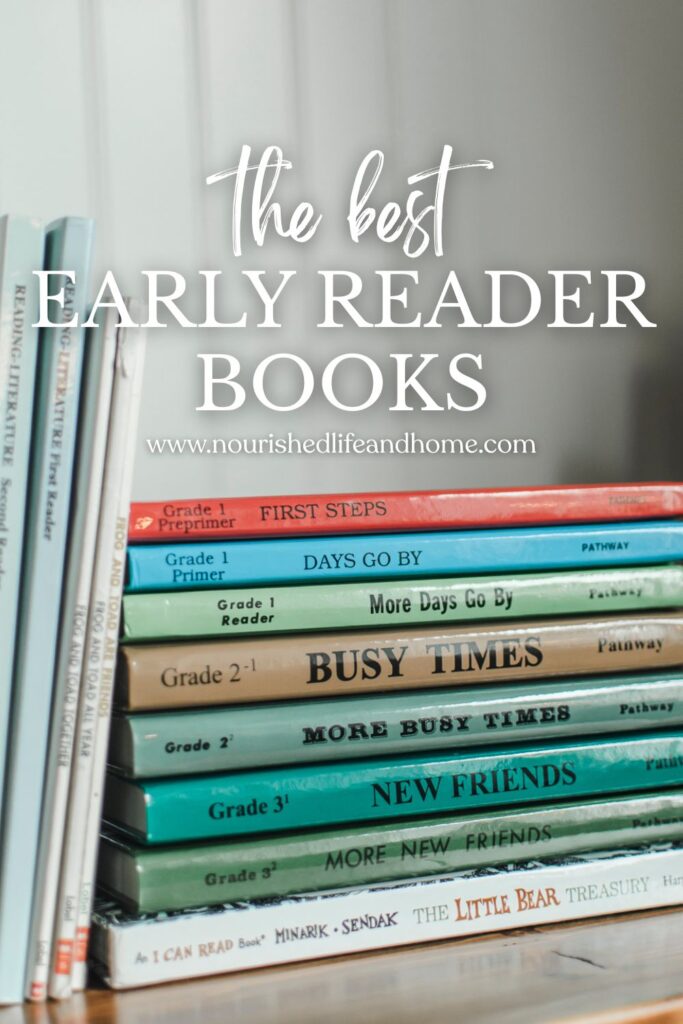
Once my children have finished the Dash into Reading sets or I am seeing them confident after the second set, we dive into the Pathway Readers.
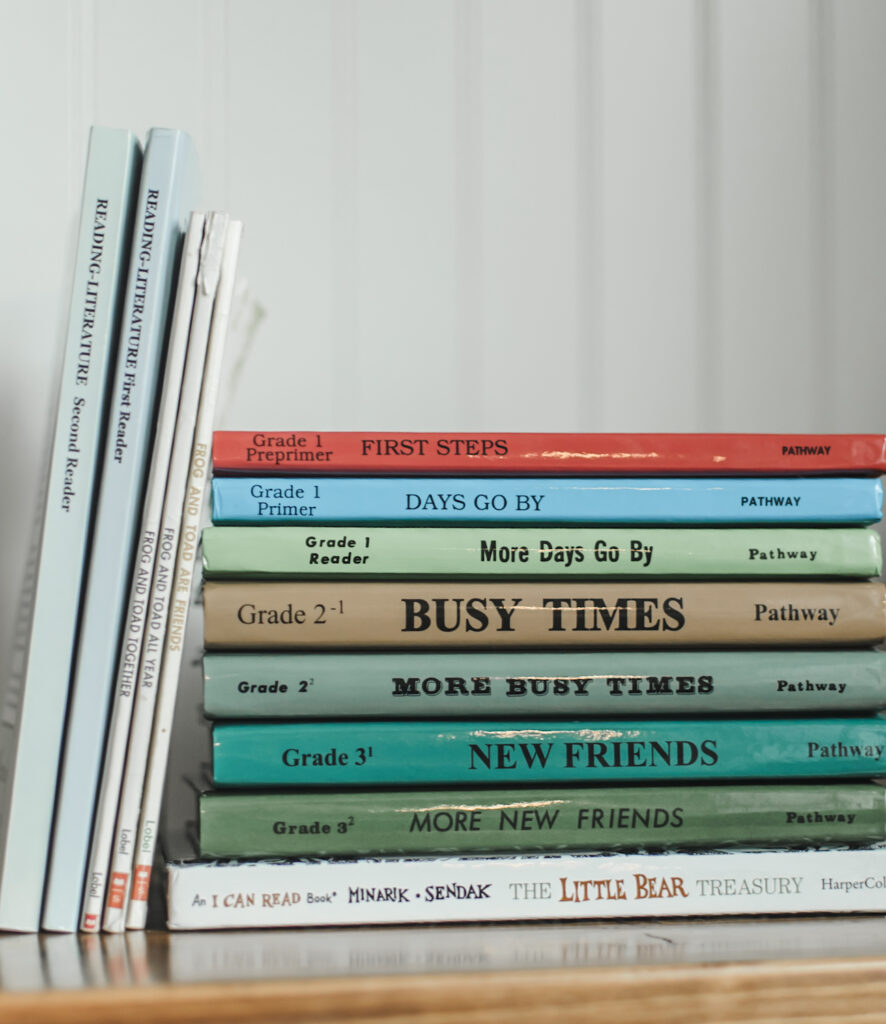
These have been my favorite of all the early readers because of the structured progression of difficulty, high moral values and family life in the story line, and my children have been able to relate with the characters because of the storyline taking place in a relatable time to the child (ie: turning 6, starting school, typical events of growing up).
My children have enjoyed these books and have been impacted by the virtue portrayed. They reference them well after the book has been finished. They look forward to the next lesson because they are engaged and curious about what may happen next.
Little Bear Series by Else Holmelund Minarik
The Little Bear series are nice to have on the shelf to switch up our reading lessons from time to time or to have great books the children know they can read on their own. Being able to pull a book off the shelf to independently read or read to a sibling, builds confidence in young children.
Little Bear books are wholesome and have been enjoyed in our home.
Arnold Lobel’s Reader Books (e.g., Frog and Toad)
Arnold Lobel’s books are sweet, funny stories with short chapters. These readers, my boys have found enjoyable to read in their free time. I also like to use them to change up our reading lessons occasionally.
Laying the Foundation for Reading
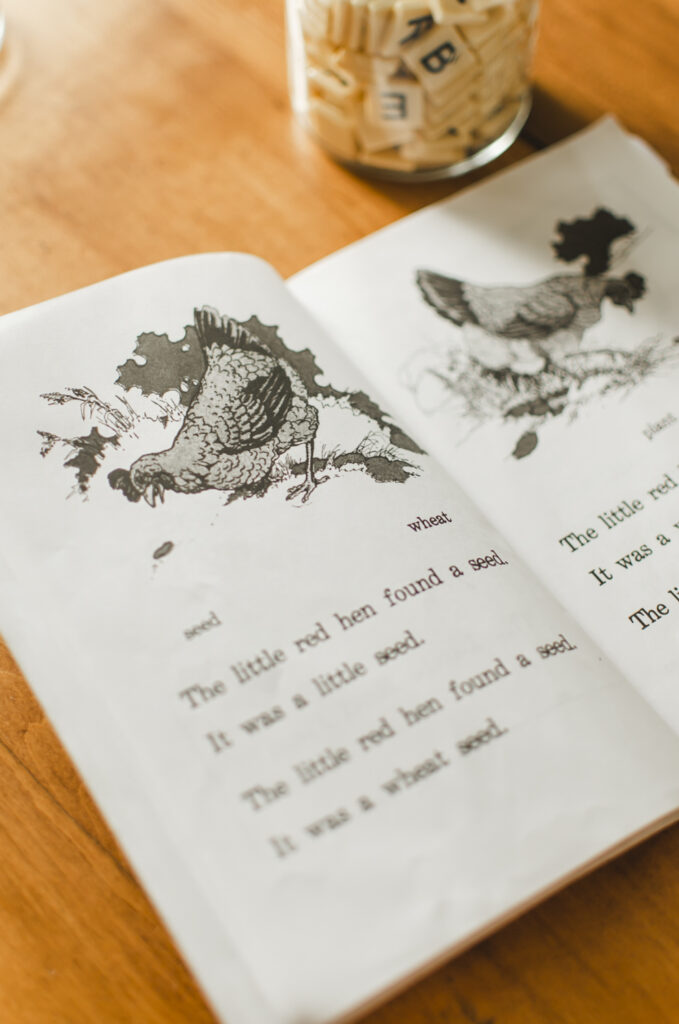
Here are a few things I have found helpful for laying the foundation for formal lessons and a love of reading.
- Read wonderful living books everyday. Babies love the sound of their mother’s voice so reading aloud, singing, and making sure to incorporate nursery rhymes and Mother Goose tales is a great way to begin building literacy in the nursery years. For my favorite books for babies and toddlers, you can find those at this post: Best Books for an 18-month Old
- Nursery Rhymes and Mother Goose. These stories have a sing-song feel to them and lots of repetition that sticks with a young child. They are enjoyable and a nice gentle way to lay a foundation for reading.
- Alphabet sounds. I like to have a variety of ways my children are being exposed to the alphabet. Instead of introducing the letter name first, I like to introduce them to it’s sound. For vowels, I introduce the short sound. Just like ” a cow says ‘moo'” I will say “A says ‘aaah’ like apple”. Introducing letters this way has helped my children be able to sound words out quicker when they automatically correlate the letter with it’s sound. A few of my favorite ways to introduce letters is through alphabet books, puzzles and even wooden letters or blocks with letters on them to play with. As we are playing, I may point out the letter and its sound or build a short 3 letter word.
Tips for Reading Success
A few tips for success in reading from my experience as a homeschool mom of 5:
- Fill your home with great living books. We have baskets of books, shelves of books, stacks of books everywhere, extending an invitation to be picked up at any moment.
- Reading nooks. Along with having books accessible, I like to create cozy spaces that are inviting and encourage reading.
- Eliminate or limit screens. We do not have a TV in our house. It’s one of those things that if the children see it, they ask for it. If they don’t see it, it’s not a temptation to ask or allow them to sit and watch something. I like to remember that I am training my children’s appetites. I am teaching them what to love by what I encourage either verbally or non-verbally. We like to encourage reading so we set up our spaces to do just that.
- Make reading fun and a regular rhythm. If you want reading to be a part of your family culture, make it fun and a daily rhythm. If you are new to incorporating reading in the day, I recommend meal times. The children’s mouths are full and ears are open. If you find this difficult because you, too, are hungry, begin with an audio book.
Here are some of our favorites for family read aloud books.
What have been some of the best early reader books your children have enjoyed? I would love to hear in the comments below!


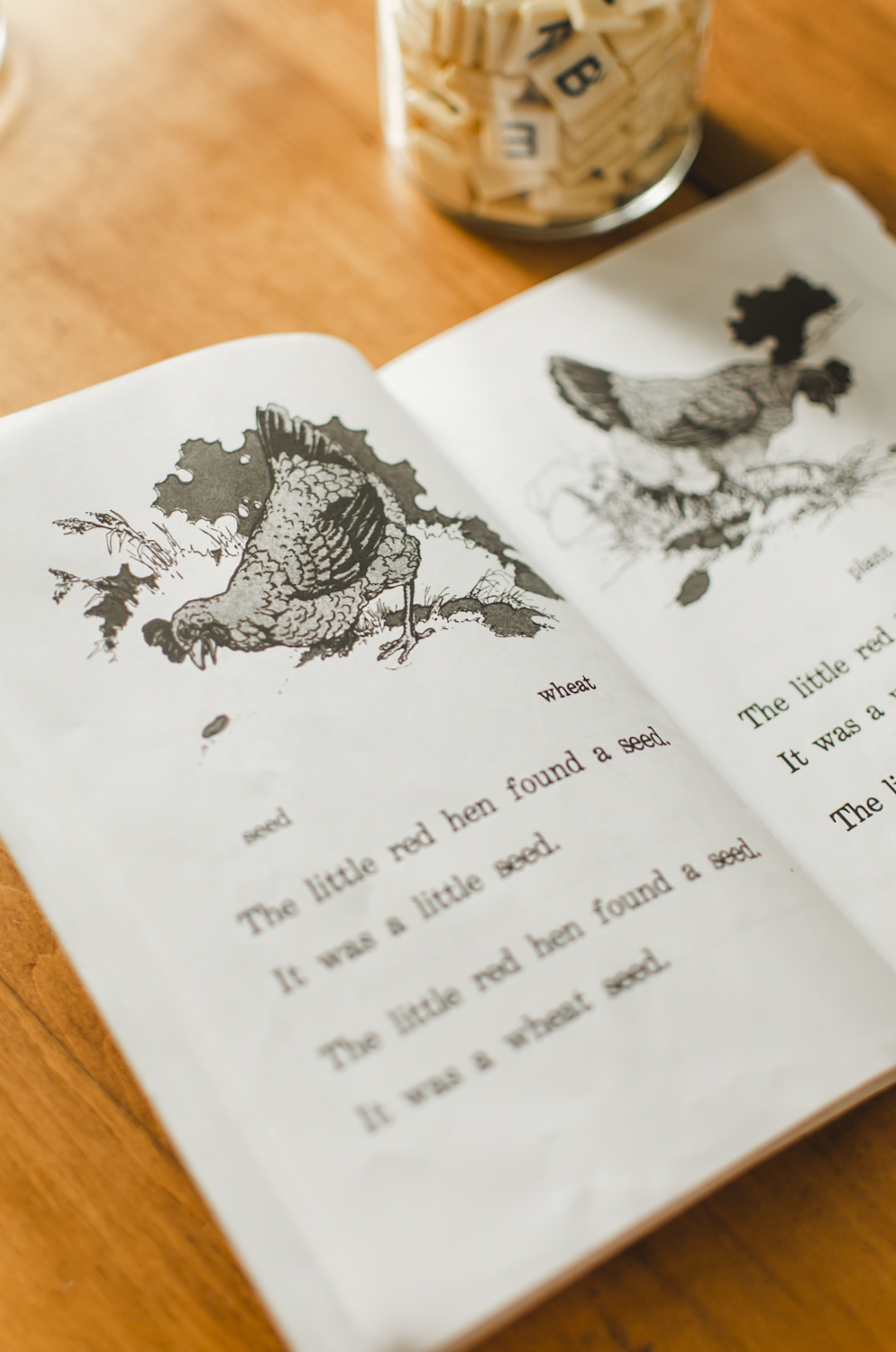
Which reader is pictured in your post, opened to the little red hen story? It looks like a good one!
https://a.co/d/0f8ESjG9 The Treadwell primer 🙂 My children have enjoyed it!